
The fragmentation of content creation today
First published January 2026, when Caira was a Kickstarter with a shipping date. Updated September 2026: most of what this essay promised has now shipped, and I’ve marked where.
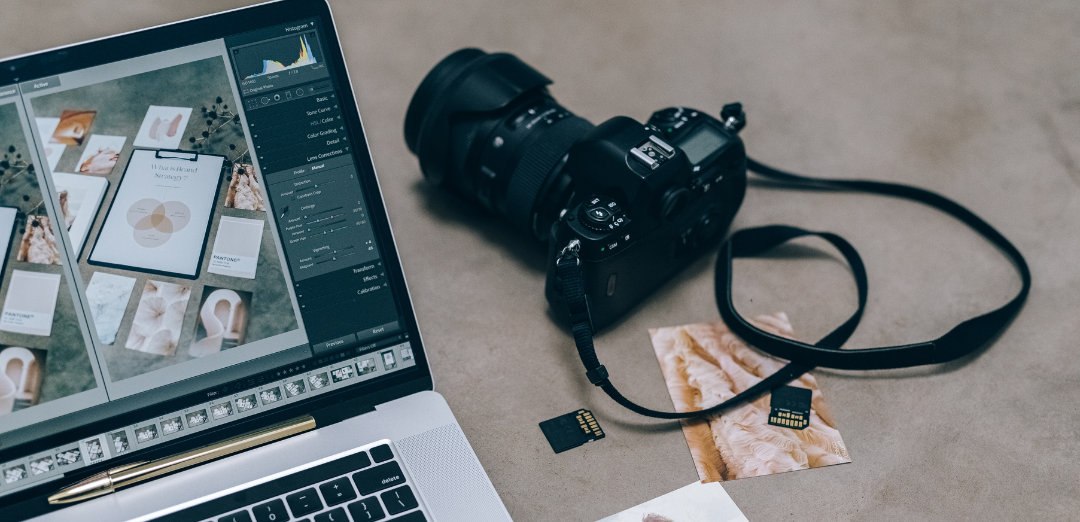
Making content in 2026 means owning too many tools. You shoot on an iPhone 15 Pro because it’s in your pocket, or on a Sony ZV-E10 because the phone photos all look the same. You edit in Lightroom or CapCut, depending on the day. You export, re-import, resize for the platform, and post. Each of those is a good product. Together they are a chore, and the chore is why most people’s best shots never get published.
Don’t get me wrong, professional workflows exist for good reasons. A colourist wants control; an agency wants a RAW archive. But the people we build for aren’t colourists. They’re a founder photographing a product on the kitchen table, a creator posting several times a week, someone on a trip who wants one great picture without ruining dinner for everyone. For them the pipeline is the price of admission, and it’s too high.
What “fragmented” actually costs
The cost is time and steps, and you can count them. A photo from a mirrorless camera passes through an SD card, a laptop, an import, a cull, an edit and an export before it reaches a phone that could have posted it two hours earlier. For most people that is an evening, and the evening is why the photo never gets posted. A small business paying a photographer £500 a day is paying for that pipeline as much as for the eye.
What we decided to do
We put the intelligence inside the camera instead of after it. Caira is a Micro Four Thirds mirrorless camera that attaches to your iPhone with MagSafe, and the app on that phone is the editing suite. In January this was a promise. Here is what it looks like now:
- Voice Control — say “make it black and white” and the camera does it, with no menus. Shipped, for all Caira owners.
- Smart Styles — six colour looks you can blend between, applied before the photo reaches your camera roll. Shipped.
- Generative Editing — describe the edit, get the result in seconds on the phone, powered by Google’s Nano Banana model. Shipped, in Caira Studio.
- Generative Video Editing — relight, reframe and extend footage you’ve already shot, using world models. Announced 2 September 2026, in private beta, part of Caira Studio this autumn.
The photo goes from the sensor to your camera roll already graded, already edited if you asked for it, and gets posted from the same phone you shot it with. That is the whole idea.
What hasn’t changed
We still think the camera has to be a proper camera first: a Sony sensor 400% bigger than an iPhone’s, and a Micro Four Thirds mount with over 100 native lenses. Intelligence on top of a bad image is a filter. And we still think every generative edit should start from something you actually shot, which is why Caira has no text-to-video. The camera still has to be pointed at something.
If any of this sounds like your workflow, Caira is on pre-order, and Introducing Generative Video Editing is where the thinking has got to since.